What Are Filler Words? List, Examples and How to Cut Them
Filler words are sounds and words that fill a pause without adding meaning: um, uh, er, like, you know, so, well. Everyone uses them, but in a video they make an answer feel slower than it was. goodgoodclips.com cuts “um” and “uh” from your clips and their captions automatically.
Filler words list
| Type | Examples |
|---|---|
| Sounds | um, uh, er, ah, erm, hmm |
| Words | like, so, well, okay, right, basically, actually, literally |
| Phrases | you know, I mean, you see, kind of, sort of |
Examples of filler words in a sentence
- “Um, I think we should start with pricing.”
- “It was, like, the best show we've done.”
- “So, basically, the plan didn't work.”
- “We were, you know, a bit nervous.”
The same word can be filler in one sentence and meaningful in the next. In “I like this”, “like” is a verb; in “so we left”, “so” links two ideas. That's why tools that remove filler automatically stick to sounds such as um and uh.
Why people use filler words
Filler words hold your turn while you think. They show up most in unscripted speech: interviews, podcasts, streams, meetings. A few are natural and listeners barely notice them; it's a run of them, or one word on repeat, that people start to hear.
How to use fewer filler words
- Pause instead. A one-second silence sounds more confident than “um”.
- Slow down. Fillers pile up when you talk faster than you think.
- Know your first sentence. Most fillers come at the start of an answer.
- Record yourself and listen back. You'll spot your own habit word quickly.
- Ask someone to count. That's a whole role at Toastmasters.
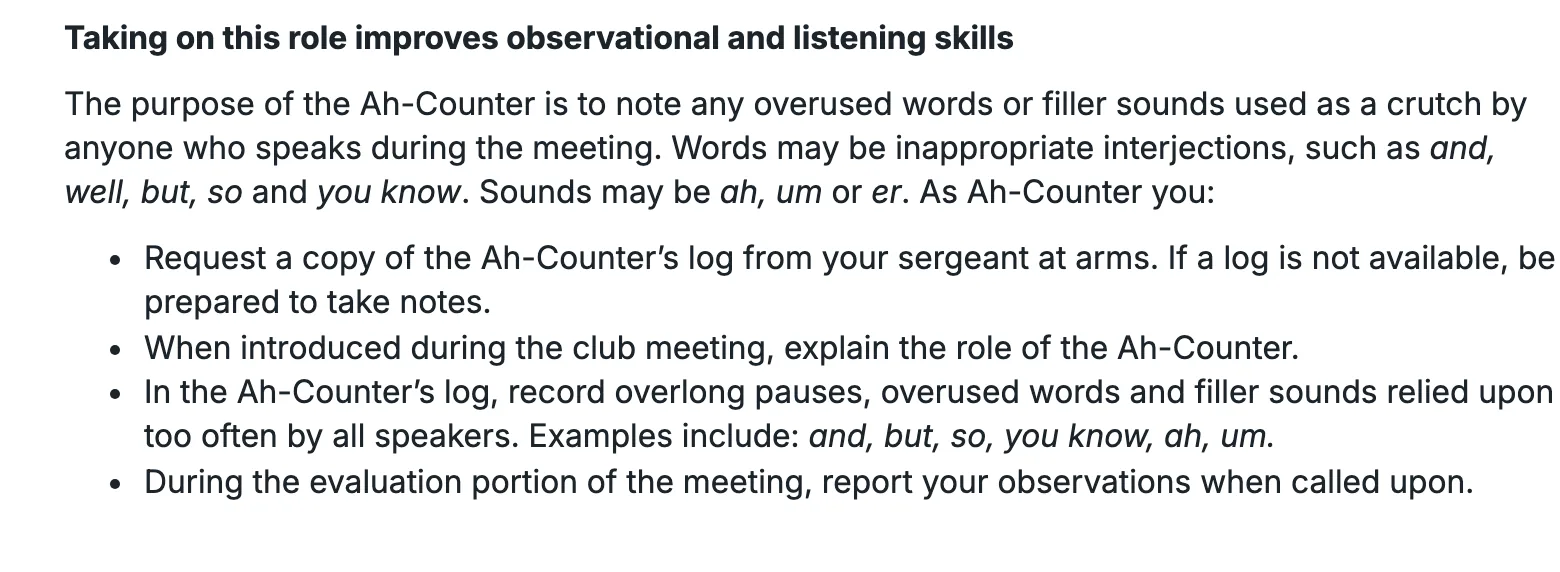
At Toastmasters meetings the Ah-Counter notes overused words and filler sounds, such as “and”, “but”, “so”, “you know”, “ah” and “um”, and reports back at the end, as its club role page describes.
Filler words in transcripts: verbatim vs clean
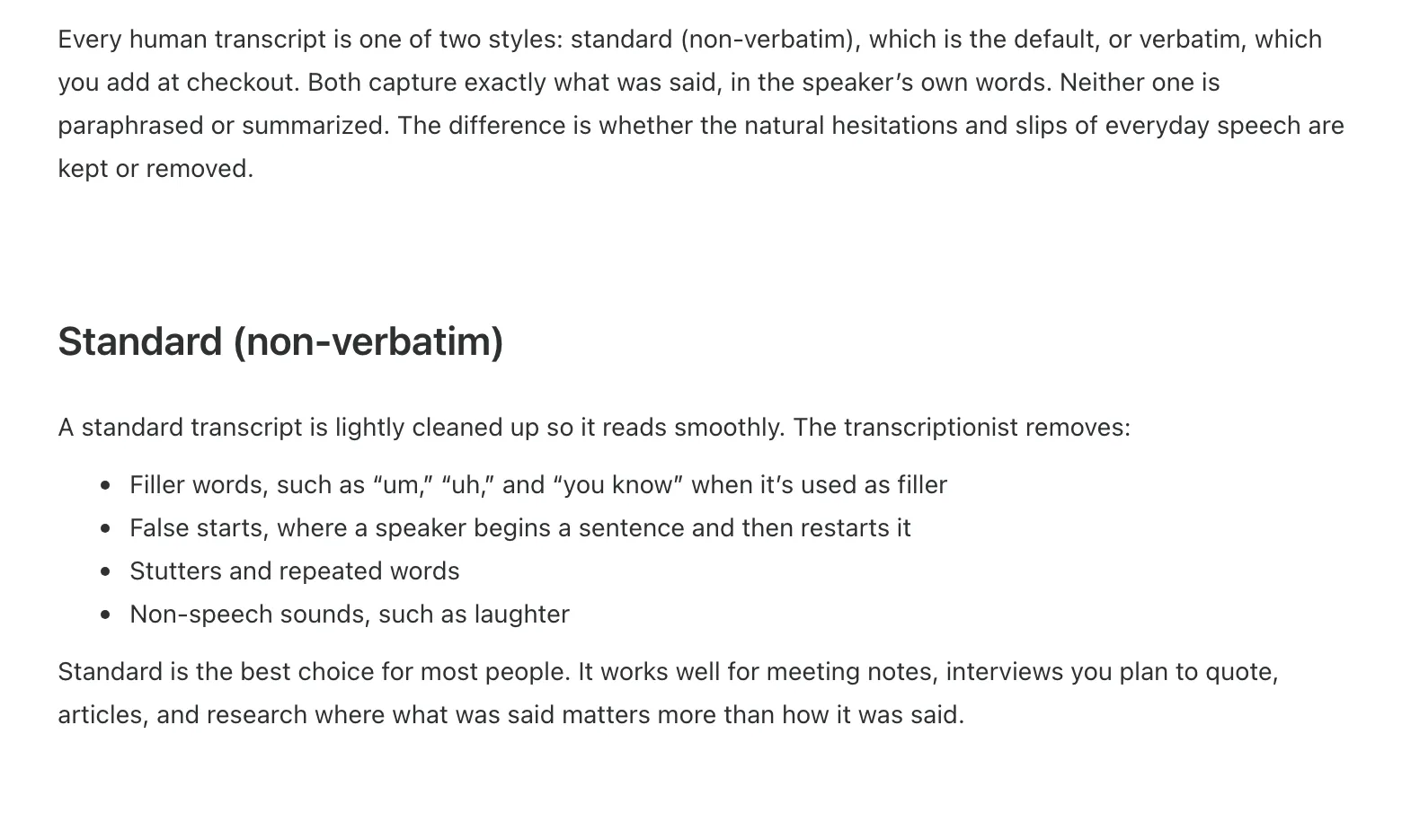
In transcription, keeping filler words is a style choice. Rev's standard transcripts remove filler words such as “um”, “uh” and “you know” (when used as filler), false starts and stutters. Its verbatim transcripts keep them, for legal work, research on speech, and captions that must match the audio exactly. So in a full verbatim transcript, every um, uh and repeated word stays in.
How to remove filler words from a video
In a regular editor you find each um on the timeline and cut it out by hand, then fix the captions to match. In goodgoodclips.com, Remove filler words is on by default for English videos. It cuts um, uh, erm, hmm and similar sounds, leaves a little air either side so the cut sounds natural, and takes them out of the captions too. Turn on Remove pauses as well to shorten silences longer than ¾ of a second.
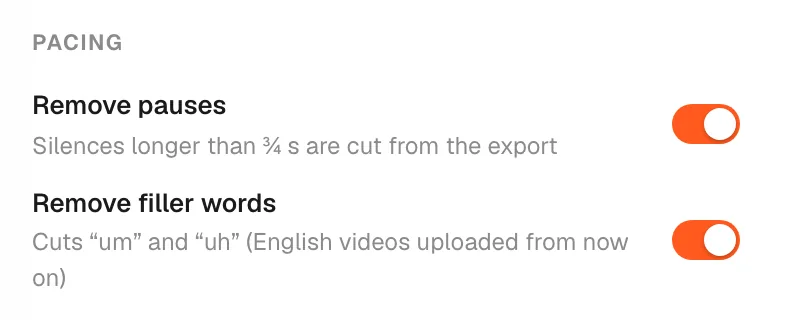
Words like “like” and “so” stay, because removing them automatically would cut real words as well. Filler removal works on English only; in other languages some of these sounds are real words.

More on cleaning up clips: how to add captions to a video and video hooks.