YouTube Shorts Monetization: Requirements and How Shorts Pay
YouTube Shorts make money from the ads that play between Shorts in the Shorts Feed. YouTube pools that ad revenue each month, splits it by views, and creators in the YouTube Partner Program keep 45% of their share. goodgoodclips.com helps you post more Shorts by cutting them from the long videos you already make.
YouTube Shorts monetization requirements
- Join the YouTube Partner Program. Today that means 1,000 subscribers plus either 4,000 watch hours in 12 months or 10 million qualified Shorts views in 90 days. The full rules, including what changes for new creators in 2027, are in how many watch hours to monetize YouTube.
- Accept the Shorts Monetization Module in YouTube Studio. Shorts views from before you accept don't earn.
- Follow the advertiser-friendly content guidelines. Only views of Shorts that do count.
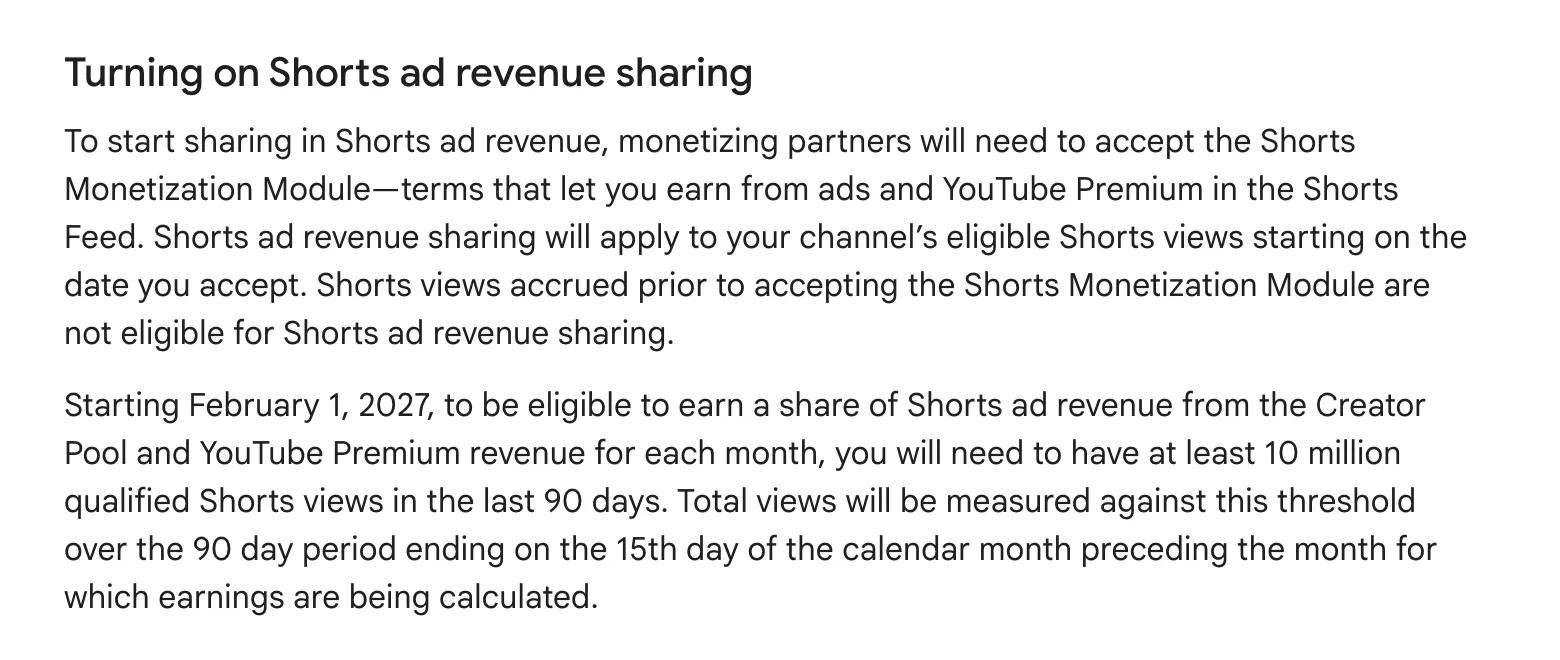
A new rule starts on 1 February 2027: to earn Shorts ad and YouTube Premium revenue in a given month, you'll need at least 10 million qualified Shorts views in the previous 90 days, according to YouTube's Shorts monetization policies.
How Shorts revenue sharing works
YouTube's policy page describes four steps:
- Pool the ad revenue. Each month, revenue from ads between Shorts is added together.
- Set aside music costs. A Short with no music puts all its revenue in the Creator Pool. With one track, half goes to the pool and half to music licensing; with two tracks, one third goes to the pool.
- Allocate the Creator Pool to monetizing creators by their share of engaged Shorts views in each country.
- Apply the 45% revenue share. You keep 45% of your allocation, whether or not you used music.
Music shrinks the pool, not your slice of it: your allocation counts 100% of your views either way. YouTube Premium revenue from Shorts views is shared the same way, at 45%.
How much do YouTube Shorts pay per 1,000 views?
There's no fixed rate, because it depends on each month's ad revenue and total views in each country. YouTube's own hypothetical example: 100 million engaged views and $100,000 of ad revenue in a country, a $90,000 Creator Pool after music costs, and a Short with 1 million views gets 1% of it, $900. At 45%, the creator earns $405.
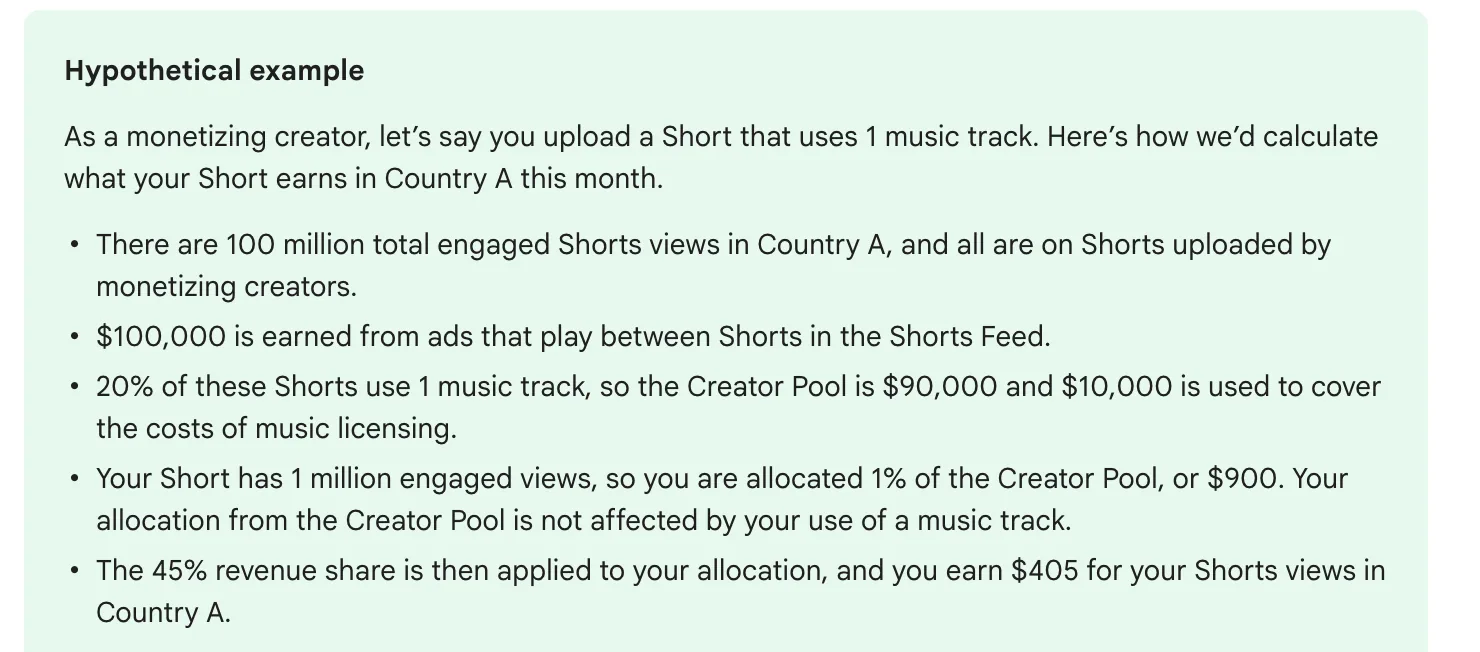
That example works out to about 40 cents per 1,000 views, but it's illustrative. Your real figures show up in YouTube Analytics as estimated Shorts Feed ad revenue, and YouTube Shorts analytics explains what to look at.
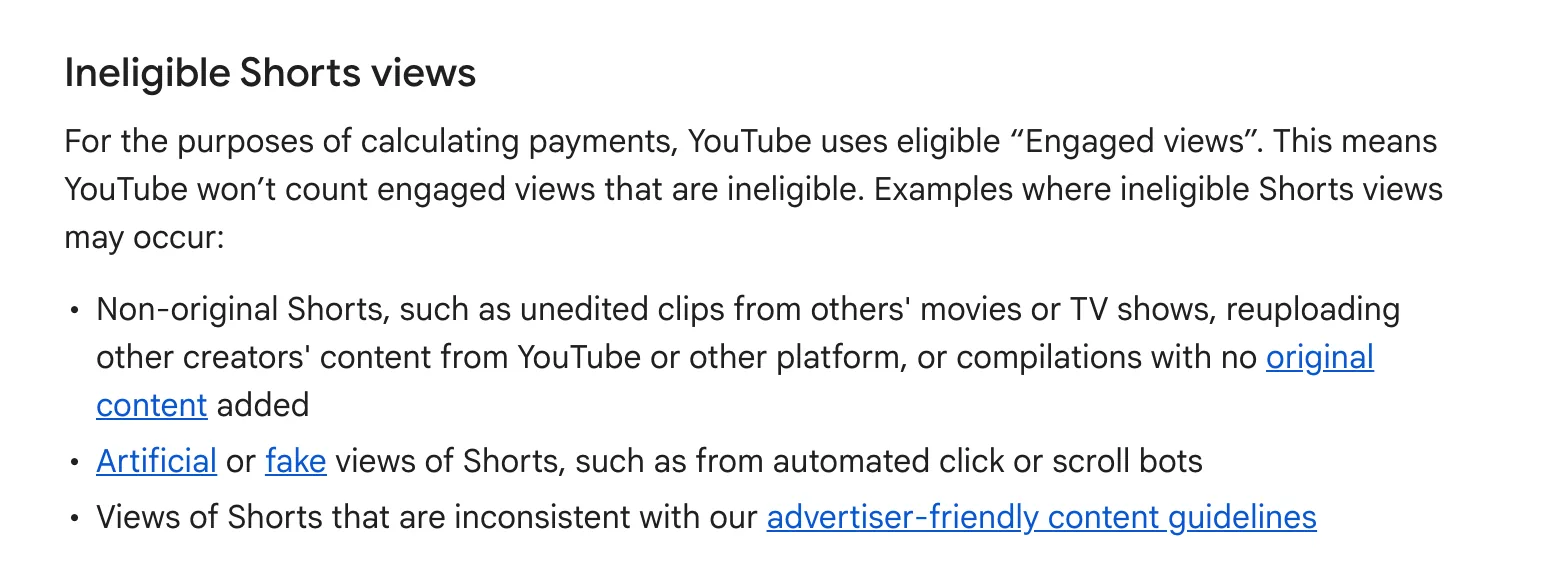
Shorts views that don't earn
- Non-original Shorts: unedited clips from movies or TV, reuploads of other creators' content, and compilations with no original content added.
- Artificial views, such as from click or scroll bots.
- Views of Shorts that aren't advertiser-friendly.
- Blocked Shorts: a Short over one minute with claimed content is blocked and can't earn. See how long YouTube Shorts can be.
Get more Shorts from what you already make
Earnings follow views, and views follow consistent posting. Upload a podcast, stream or long video to goodgoodclips.com and it finds the moments that stand on their own, reframes them to vertical 1080p with captions, and writes a title and description for each, so one long video becomes a week of original Shorts.